
Every year, hundreds of thousands of people around the world find themselves caught in a web of fake affection, false promises, and devastating financial loss. Romance scams — one of the most emotionally destructive types of scams — continue to rise at an alarming rate. Whether it begins with a simple message on a dating app, a connection request on social media, or an innocent email, a romance scam can quickly spiral into a situation that costs victims not just money, but their sense of trust and emotional wellbeing.
This comprehensive guide is designed to help you understand what romance scams are, how they work, and — most importantly — how to protect yourself and others. If you believe you may already be a victim, this article also outlines steps you can take to report the incident and seek appropriate guidance.
What Are Romance Scams and How Do They Work?
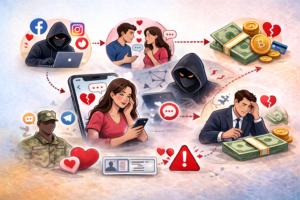
A romance scam is a type of confidence fraud in which a criminal creates a fake persona to establish a romantic relationship with their victim. The goal is almost always financial. Once the scammer has gained the victim’s trust — a process that can take days, weeks, or even months — they introduce a fabricated crisis that requires urgent financial help.
These scams have become increasingly sophisticated. Today’s scammers use professional-looking fake profiles, stolen photos, and even scripted conversations to make their deception feel completely real. Many operate as part of organized criminal networks, with multiple individuals working together to manage dozens of victims simultaneously.
The rise of romance scams in the digital age has coincided with the explosion of online dating platforms, social media networks, and global communication apps. Where once scammers needed physical proximity to deceive victims, today’s fraudsters can operate from anywhere in the world, targeting anyone with an internet connection.
Understanding types of scams is crucial because romance fraud doesn’t always look the same. Some involve elaborate long-term deceptions; others are quick, opportunistic grabs for money. Recognizing the patterns is your first line of defense.
The Rise of Romance Scams in the Digital Age
The Federal Trade Commission (FTC) and consumer protection agencies across the globe have consistently flagged romance scams as one of the fastest-growing categories of fraud. Losses reported to the FTC from romance scams exceeded $1.3 billion in recent years — and experts believe the true figure is significantly higher, since many victims never come forward out of embarrassment or shame.
The digital landscape has made it easier than ever for fraudsters to reach potential victims. Dating apps, Facebook, Instagram, WhatsApp, and even professional platforms like LinkedIn have all been used as hunting grounds for scammers. A social media romance scam, for instance, might begin with a seemingly innocent friend request, followed by weeks of warm, attentive conversation before any financial request is made.
It’s also worth noting that romance scams frequently intersect with other types of financial fraud. Many victims have reported being drawn into what appeared to be a legitimate investment opportunity — only to realize much later that they had been manipulated. This is closely related to why cryptocurrency scams are on the rise: scammers often use the promise of crypto profits to extract larger sums of money after establishing trust through romantic deception.
Who Is Most at Risk for Romance Scams?
Romance scams do not discriminate. Victims come from every age group, educational background, profession, and income level. That said, certain groups tend to be targeted more frequently:
- Older adults, particularly those who are widowed or recently divorced, who may be seeking companionship and are less familiar with common online scam tactics.
- People experiencing loneliness or going through a significant life transition, such as a breakup, job loss, or bereavement.
- Individuals who are highly trusting by nature and value emotional connection deeply.
- People who are active on multiple social media platforms or dating apps, increasing their exposure to potential fraudsters.
- Professionals with disposable income who might be seen as financially attractive targets.
It is important to stress that falling victim to an online romance scam does not reflect a lack of intelligence or judgment. These are highly trained manipulators who exploit fundamental human needs — love, connection, and belonging. Anyone can be targeted, and no one should feel ashamed for being deceived.
Why Do People Fall for Romance Scams?
Understanding the Psychology Behind Romance Scams
To protect yourself, it helps to understand why romance scams work so effectively. Scammers are skilled psychologists who exploit cognitive and emotional vulnerabilities with precision.
One key tactic is the ‘love bombing’ technique — overwhelming the victim with affection, attention, and flattery from the very beginning of the relationship. This creates an intense emotional bond quickly, making the victim feel uniquely understood and cherished. Once that bond is established, the victim’s critical thinking becomes harder to access when red flags appear.
Scammers also rely on the ‘sunk cost’ effect: the more time, emotion, and money a person has invested in a relationship, the harder it becomes to walk away, even when warning signs emerge. Many victims describe ignoring their own doubts because they didn’t want to believe that someone they cared about could be deceiving them.
Additionally, scammers deliberately isolate their targets from friends and family who might offer outside perspectives. They may subtly discourage the victim from discussing the relationship with others, warning that friends or family ‘won’t understand’ or ‘are just jealous.’
These dynamics explain not only romance fraud but also shed light on why forex trading scams continue to thrive — both rely on trust-building, isolation, and emotional manipulation before money is ever requested.
Where Do Romance Scams Typically Occur?
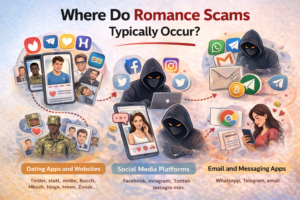
Romance scams can begin on virtually any digital platform, but certain environments are particularly common:
Dating Apps and Websites
Platforms such as Tinder, Match, Bumble, Hinge, eHarmony, and Zoosk are frequently used as starting points. Scammers create attractive, detailed profiles using stolen photographs — often of models, military personnel, or successful-looking professionals.
Social Media Platforms
Facebook, Instagram, and Twitter are common launchpads for social media romance scams. A scammer may send a friend request, engage with a victim’s posts, and gradually shift the conversation to a more private messaging channel.
Email and Messaging Apps
Once initial contact is made, scammers typically move the conversation to WhatsApp, Telegram, or email — platforms where there is less oversight and where they can communicate more freely.
Gaming Platforms and Forums
Online games and hobby forums are increasingly being used to initiate contact, particularly with younger victims who may be more trusting of individuals they’ve ‘met’ through shared interests.
10 Warning Signs of a Romance Scam
Being aware of romance scam warning signs is one of the most effective ways to protect yourself. Here are the most important red flags to watch for:
- The person claims to live or work far away — often as an oil rig worker, military officer, doctor working abroad, or international businessperson.
- They profess deep feelings very quickly, often within the first few conversations.
- Their profile photos look professionally taken or oddly perfect — a reverse image search often reveals the images belong to someone else.
- They consistently avoid video calls or in-person meetings, always citing technical problems, travel, or work commitments.
- Their backstory has inconsistencies, or details change over time.
- They claim to have experienced a sudden crisis — a medical emergency, a legal problem, a stranded shipment — and need money urgently.
- They ask for gift cards, wire transfers, or cryptocurrency rather than more traceable payment methods.
- They become unusually upset or defensive when you question their identity or motives.
- They attempt to isolate you from friends and family who express concern.
- They introduce investment opportunities — often involving cryptocurrency — that promise high returns, which is a hallmark of a crypto romance scam.
7 Common Tactics Used by Romance Scammers
How Scammers Build and Exploit Your Trust
Understanding the playbook that scammers use can help you recognize a dangerous situation before it escalates.
- Love Bombing: Intense, over-the-top affection early in the relationship designed to create a rapid emotional bond.
- Identity Fabrication: Building an elaborate false persona, often posing as military personnel. A military romance scam is particularly common because soldiers are frequently deployed, which explains long-distance communication and the inability to meet in person.
- Crisis Manufacturing: Creating a sudden, urgent financial emergency — a medical bill, legal problem, or travel complication — that only the victim can resolve.
- Cryptocurrency Manipulation: Encouraging victims to invest in cryptocurrency platforms that turn out to be fraudulent, or requesting payment via crypto because it is difficult to trace or reverse. This directly connects to broader concerns about why cryptocurrency scams are on the rise.
- Isolation Tactics: Subtly discouraging the victim from discussing the relationship with friends or family.
- Guilt and Emotional Leverage: Using the emotional bond to make the victim feel responsible for helping. Phrases like ‘I thought you loved me’ or ‘I have no one else to turn to’ are common manipulation tools.
- Gradual Escalation: Starting with small financial requests before building up to much larger sums once the victim has demonstrated willingness to help.
When Should You Be Concerned About a Romance Scam?
You should consider taking action if any of the following situations arise in an online relationship:
- You have sent money to someone you have never met in person.
- You are being asked to receive and forward money on someone else’s behalf (this is often a form of money muling, which is illegal).
- Your online partner is pressuring you to invest in a platform you know little about — especially when they claim to have made significant profits themselves.
- You are hiding the relationship or financial transactions from people close to you.
- You have lost access to funds that were supposed to generate ‘returns’ on an investment platform introduced by your online partner. This closely mirrors patterns seen in investment scam cases and raises the question of how to report and recover from investment scams of this nature.
The sooner you recognize these warning signs, the better positioned you are to protect yourself and limit further damage.
The Emotional Toll of Romance Scams
The impact of a romance scam goes far beyond financial loss. Victims frequently describe feelings of profound shame, embarrassment, and self-blame — emotions that are entirely undeserved but nonetheless difficult to shake. The betrayal of trust can be more devastating than the financial damage itself, leaving victims questioning their own judgment and ability to form genuine connections.
Depression, anxiety, social withdrawal, and in severe cases, even suicidal ideation have been reported among romance scam victims. It is critical for victims to understand that they are not alone, that this is not their fault, and that the psychological impact deserves the same attention and care as any other trauma.
Seeking support from a mental health professional, a trusted friend, or a victim support group can be an important first step toward healing. Recovery from a love scam is not just about recovering financially — it’s about reclaiming your sense of self and your capacity to trust again.
Real Stories: Victims of Romance Scams Share Their Experiences
Voices from the Community
While we protect the identities of individuals, the following composite stories reflect experiences commonly reported by romance scam victims around the world:
Margaret, 58 — Lost $47,000 to a Military Romance Scam
Margaret met ‘Captain David Williams’ on a reputable dating website. He was charming, attentive, and claimed to be a U.S. Army officer stationed in Syria. Over six months, he became the most important person in her life. Then came the crisis: he needed money to secure a leave permit, then a medical procedure, then a business investment. By the time a friend confronted her with evidence that his photos belonged to a real person in another country, Margaret had sent over $47,000 in wire transfers and gift cards.
James, 34 — Targeted Through a Crypto Romance Scam
James matched with someone on a popular dating app. After weeks of conversation, ‘Linda’ introduced him to a cryptocurrency investment platform she claimed had made her rich. James invested small amounts at first, and the platform showed impressive ‘returns.’ When he tried to withdraw his funds, the platform suddenly required him to pay large fees. He eventually lost $22,000 before realizing the platform — and Linda — were part of an elaborate dating scam.
These stories are painfully common. They serve as a reminder that romance scams do not target only the vulnerable or uninformed — they target anyone capable of human connection.
Step-by-Step Guide to Identifying Romance Scams
If you are currently in an online relationship and want to verify whether it is genuine, here are practical steps to take:
- Conduct a reverse image search of your contact’s profile photos using Google Images or TinEye. If the images appear on other websites or belong to a different identity, this is a serious red flag.
- Ask specific, verifiable questions about their life, career, and location. Genuine people can usually provide consistent, specific answers; scammers often give vague or shifting responses.
- Request a live video call. Scammers frequently refuse or make excuses. If they do agree, watch for signs that the call may be pre-recorded or manipulated.
- Research any company or organization they claim to work for. Many scammers invent employers or use the names of real companies they have no connection to.
- Consult a trusted friend or family member. Sometimes an outside perspective can identify red flags that are harder to see from within the relationship.
- Be especially cautious if financial topics are introduced — whether it’s a request for money or an investment opportunity. Legitimate romantic partners do not ask for money from people they have never met.
5 Steps to Protect Yourself from Romance Scams
The Ultimate Guide to Protecting Yourself from Romance Scams
Prevention is always better than recovery. These five steps can significantly reduce your risk of becoming a victim:
- Guard your personal information carefully. Never share financial details, your home address, or sensitive identification with someone you have not met in person and thoroughly vetted.
- Be skeptical of overly perfect profiles. Real people have imperfect lives, inconsistent posting habits, and multiple connections. A profile that looks flawless and recent should raise immediate questions.
- Use established, reputable platforms and report suspicious behavior directly to them. Dating apps and social media companies take fraud reports seriously and can investigate profiles.
- Never send money or financial assets to someone you have not met. This is the single most effective rule for avoiding romance fraud, regardless of how convincing the story may be.
- Educate yourself and others. Share information about romance scam warning signs with friends and family — particularly older relatives who may be less familiar with digital deception tactics.
How to Rebuild Trust After a Romance Scam
Rebuilding trust after a romance scam is a process that takes time, support, and self-compassion. It begins with acknowledging that what happened was not your fault. Skilled fraudsters are professionals at deception, and they exploit emotions that are a natural part of being human.
Several steps can support recovery. Talking to a therapist or counselor who has experience with fraud trauma can help process the complex emotions of grief and betrayal. Connecting with support communities — many of which exist online — can reduce the isolation that many victims feel.
When you feel ready, consider returning to social and romantic life gradually, with a greater awareness of the red flags outlined in this guide. Understanding what signs you may have missed is empowering, not self-punishing. The goal is knowledge, not self-blame.
Many victims also find purpose in sharing their stories to warn others. Reporting your experience at ScamsReport.net, for example, not only contributes to a broader database of scammer activity but can also be a meaningful step in the healing process.
How to Report a Romance Scam: Your Essential Guide
If you believe you have been targeted by or have fallen victim to a romance scam, taking action promptly is important — both for your own protection and to help prevent others from being harmed.
Who to Contact
- Your local police department or cybercrime unit. File a formal police report, even if recovery seems unlikely. This creates an official record that may be needed for other processes.
- The FTC at reportfraud.ftc.gov if you are in the United States. In other countries, contact the relevant consumer protection authority.
- The dating platform or social media site where the scam began. Report the profile so it can be investigated and removed.
- Your bank or financial institution immediately if you have sent money. In some cases, transactions can be reversed if reported quickly.
- net, where you can file a complaint and submit evidence in a secure, supportive environment.
What Evidence to Gather
Before reporting, gather as much evidence as possible. Save screenshots of all conversations, note any usernames, email addresses, or phone numbers used by the scammer, and document any financial transactions with dates and amounts. This information can be invaluable to investigators.
Even if you feel embarrassed, reporting is important. Many victims who do report find that it helps others avoid the same fate — and that it is also a personal step toward reclaiming a sense of control.
Users can securely report suspicious romance scam activity at ScamsReport.net. The platform allows you to submit your complaint and evidence in a straightforward process designed with victim support in mind.
Understanding the Connection: Romance Scams and Financial Fraud
Romance scams increasingly overlap with other forms of financial fraud. Victims are often introduced to what appear to be legitimate investment opportunities — particularly in cryptocurrency — by their scammer, adding financial devastation on top of emotional betrayal.
Many victims also report characteristics that mirror questions like what are the common signs of lottery scams — including promises of big payouts, a sense of urgency, and requests for upfront fees before any money is released. The psychological manipulation techniques are strikingly similar across scam types.
It’s also worth noting that victims of romance scams may find themselves unwittingly involved in money laundering if they are asked to receive and forward funds. Being aware of the legal implications of these requests is critical.
If you’ve been involved in any type of financial transaction connected to a suspicious online relationship, consider documenting the details and seeking guidance from a financial fraud expert before taking further action.
Romance scams thrive when victims stay silent. The shame, confusion, and grief that follow a romance scam are real — but so is the possibility of speaking up, seeking guidance, and helping to prevent the same thing from happening to someone else.
If you believe you’ve encountered a suspicious online relationship, a misleading investment scheme introduced by a romantic contact, or a withdrawal issue tied to a platform recommended by someone you met online, consider reporting the incident. Sharing your experience may help protect others and initiate appropriate review by relevant authorities.
At ScamsReport.net, you can:
- File a formal complaint about a suspicious online relationship or financial scheme
- Submit evidence securely, including screenshots, transaction records, and contact details
- Access resources and expert guidance tailored to romance scam victims
- Connect with a community that understands your experience without judgment
You are not defined by what happened to you. You are defined by what you choose to do next. Awareness, reporting, and community action are the most powerful tools we have against romance scammers — and every report matters.
Have you fallen prey to Romance Scams? You don’t have to suffer in silence. Take action by submitting a complaint form on our Scams Report website. Our team of experts can offer you a free consultation to guide you through the process of recovering your funds.
Please refer to our list of Scam Broker 2025 and Scam Brokers 2024 to check if you are dealing with a scammer or a genuine person.
Visit our LinkedIn Page