

Lottery Scams: The Ultimate Guide to Identifying and Avoiding Them
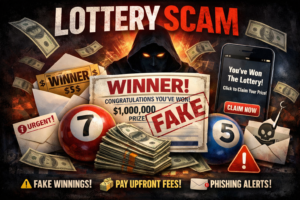
Every year, millions of people around the world receive an unexpected message telling them they have won a lottery they never entered. The excitement is immediate — and that is exactly what lottery scammers count on. Lottery scams are among the oldest and most widespread forms of financial fraud, and in today’s digital age, they have evolved into highly sophisticated operations targeting people across every country, age group, and income level. Understanding how these schemes work is the first step to protecting yourself and your finances.
The Rise of Lottery Scams in the Digital Age
The internet has transformed how fraudsters operate. What was once limited to suspicious postal mail has expanded into email lottery scams, WhatsApp lottery scams, social media messages, and fraudulent phone calls. Scammers can now reach thousands of potential victims simultaneously with minimal effort, making lottery fraud one of the most prevalent types of scams globally.
Just as questions like Who Is Behind the Forex Trading Scams? and Why Do Online Shopping Scams Continue to Thrive? reflect how fraud has permeated every corner of the financial and consumer world, lottery scams have similarly entrenched themselves in everyday digital life. The anonymity and reach of the internet have made it easier than ever for criminals to set up fake lottery operations and disappear before victims realize what has happened.
Online lottery scams now arrive through phishing lottery emails designed to look like legitimate government agencies, major companies like Microsoft or Coca-Cola, or international lottery organizations. The polish and professionalism of these messages have improved dramatically, making lottery scam warning signs harder to detect for the untrained eye.
What Are Common Signs of Lottery Scams?
Recognizing a lottery prize scam before you respond can save you from significant financial and emotional harm. While these schemes vary in their approach, there are consistent red flags that appear across virtually every type of lottery fraud.
7 Warning Signs of a Lottery Scam
- You never entered. The most obvious sign of a lottery notification scam is being told you won a lottery or sweepstakes you never participated in. Legitimate lotteries require a ticket or entry — there are no exceptions.
- You must pay fees upfront. Any request to pay processing fees, taxes, legal charges, or administrative costs before receiving your winnings is a textbook advance fee lottery scam. Legitimate organizations never ask winners to pay before claiming a prize.
- The communication looks unofficial. Scam prize notifications typically come from free email services like Gmail or Yahoo, contain spelling errors, or use generic greetings like ‘Dear Winner.’
- You’re pressured to act quickly. Creating urgency is a hallmark tactic of fraudulent lottery calls and messages. Any notification demanding you respond within 24 to 48 hours to claim your prize is almost certainly a scam.
- The lottery is international and vague. International lottery scam messages often reference obscure foreign lotteries with no verifiable official website or contact information.
- You are asked for personal or banking information. A legitimate lottery will never ask you to provide your bank account details, passport number, or Social Security information via email or text to claim a prize.
- The prize amount is unusually large. Fake sweepstakes scams often advertise life-changing sums — millions of dollars — to make the offer irresistible. The bigger the promise, the more skeptical you should be.
If you have received a message that matches these descriptions, do not respond. Consider reporting it to help protect others from falling into the same trap.

Top 5 Lottery Scams You Need to Know About
1. The Email Lottery Scam
Phishing lottery emails remain one of the most common delivery methods for lottery fraud. These messages impersonate real organizations, complete with fake logos and official-looking formatting. Once you reply, scammers begin requesting fees under the guise of a lottery tax scam or processing requirement.
2. The WhatsApp Lottery Scam
As messaging platforms have grown, so have scam operations using them. A WhatsApp lottery scam typically arrives from an unknown number, claiming you have been randomly selected as a lottery winner. The message may include links to convincing fake websites and requests for your personal details or an upfront payment.
3. The Advance Fee Lottery Scam
This is perhaps the most financially damaging variation. Victims are told their prize is being held and can only be released after paying an advance fee — for taxes, legal paperwork, or courier services. Once paid, the fraudsters demand additional fees, and the cycle continues until the victim has nothing left or realizes they have been deceived.
4. The Lottery Winner Scam via Social Media
In a lottery winner scam on platforms like Facebook or Instagram, fraudsters create fake profiles impersonating real lottery winners or organizations. They contact users directly, claiming they want to ‘share their winnings’ or that you have been chosen as a secondary winner.
5. Fraudulent Lottery Calls
Fraudulent lottery calls target victims by phone, often using spoofed numbers that appear to come from legitimate organizations. Callers use high-pressure tactics and emotional manipulation to extract personal information or immediate payments.
Documenting and reporting suspicious calls, emails, or messages is an important step. If you have experienced any of these scenarios, sharing your experience through a trusted reporting platform can help investigators and protect other potential victims.
Why Do Lottery Scams Target Individuals?
Lottery scams exploit a universal human truth: the desire for a sudden, life-changing windfall. Understanding why these scams are so effective begins with understanding human psychology. Much like Why Are Romance Scams on the Rise? reveals the exploitation of emotional vulnerability, lottery fraud exploits financial hope and the dream of escaping financial hardship.
How Lottery Scams Exploit Human Psychology?
Scammers understand that once someone believes they have won, their cognitive defenses drop. The brain begins planning how to spend the money rather than evaluating whether the win is real. This psychological phenomenon — sometimes called ‘winner’s bias’ — is deliberately triggered by scam prize notifications that feel immediate, personalized, and credible.
The lottery fee scam is particularly insidious because, once a victim has paid an initial fee and is emotionally invested, they are far more likely to pay again. Sunk cost psychology keeps victims engaged long after the warning signs should have prompted them to walk away.
Inside the Mind of a Lottery Scam Artist
Lottery scam artists are patient, organized, and deeply familiar with their victims’ emotional triggers. They often pose as lawyers, bank officials, or lottery administrators, building a persona of authority and trustworthiness over days or even weeks before making financial demands. They also use a technique called ‘grooming’ — gradually making requests that seem small and reasonable before escalating to larger amounts.
Who Is Most Likely to Fall for Lottery Scams?
Contrary to popular belief, lottery scam victims are not limited to the elderly or technologically inexperienced. Studies by consumer fraud agencies consistently show that people of all ages, education levels, and income brackets have been deceived by sophisticated lottery fraud. That said, certain groups are disproportionately targeted, including older adults who are more likely to answer unknown calls or emails, immigrants unfamiliar with local lottery systems, and individuals experiencing financial stress who may be more willing to believe a windfall is possible.
The question What Are the Warning Signs of Investment Scams? is closely related — the same cognitive vulnerabilities that make people susceptible to investment fraud also make them targets for lottery prize scams. Awareness and education are the most powerful defenses.
Where Do Lottery Scams Typically Originate?
International lottery scam operations frequently originate from countries with limited law enforcement capacity to pursue foreign financial fraud cases. However, the digital nature of these crimes means the true origin is often obscured through VPNs, fake IP addresses, and international money transfer services. Victims in the United States, United Kingdom, Canada, and Australia are among the most commonly targeted, as these countries have large populations with high internet access and disposable income.
The scammers behind these operations range from lone individuals to organized criminal networks that run multiple types of scams simultaneously. The infrastructure supporting a lottery notification scam operation may also be used to run phishing campaigns, fake broker schemes, or other types of online scam.
How to Spot and Avoid Lottery Scams?
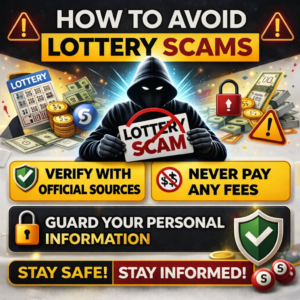
10 Tips for Recognizing Lottery Scams
- Verify independently. If you receive a lottery win notification, research the organization directly using contact details you find yourself — not those provided in the message.
- Never pay upfront fees. Legitimate lotteries do not charge winners to receive their prizes. Any fee request is a clear lottery scam red flag.
- Do not share personal information. Keep your bank details, passport, Social Security number, and other sensitive data private until you have fully verified the legitimacy of an offer.
- Check for official registration. Real lotteries are registered with government agencies and have verifiable regulatory status. Search for official government databases before responding to any lottery prize claim.
- Look for pressure tactics. Any message demanding immediate action, threatening forfeiture, or promising a narrowing time window should be treated as a lottery scam alert.
- Inspect the sender’s details carefully. Inconsistent email domains, generic sender names, and grammatical errors are common indicators of online lottery scams.
- Talk to someone you trust. Before responding to any lottery win notification, discuss it with a trusted friend, family member, or financial advisor.
- Use official scam-checking resources. Consumer protection websites, government fraud portals, and established scam reporting platforms can help you verify whether a lottery notification is legitimate.
- Do not click unknown links. Phishing lottery emails often contain links that download malware or lead to fake websites designed to harvest your credentials.
- Report immediately if targeted. Early reporting of lottery scams helps protect other potential victims and provides authorities with the information needed to investigate.
8 Common Myths About Lottery Scams Debunked
Myth 1: ‘Only uneducated people fall for lottery scams.’ Reality: Educated, successful professionals are regularly deceived by sophisticated lottery fraud operations.
Myth 2: ‘I would recognize a scam immediately.’ Reality: Modern fake sweepstakes scams are professionally designed and often indistinguishable from legitimate communications without careful scrutiny.
Myth 3: ‘Paying a small fee is reasonable for a big prize.’ Reality: This is the core of the advance fee lottery scam model. Any fee, no matter how small, is a warning sign.
Myth 4: ‘International lotteries can enter you automatically.’ Reality: You cannot win a lottery you did not enter. Any international lottery scam claiming otherwise is fraudulent.
Myth 5: ‘Scammers only target rich people.’ Reality: Lottery scam victims come from all economic backgrounds. Scammers target volume, not wealth.
Myth 6: ‘If it looks official, it must be legitimate.’ Reality: Scam prize notifications are frequently designed to mimic real organizations with convincing logos, letterheads, and official-sounding language.
Myth 7: ‘There’s no harm in responding to find out more.’ Reality: Even responding to a scam confirms your contact details are active, leading to increased targeting and potential harassment.
Myth 8: ‘Reporting a scam won’t make a difference.’ Reality: Reports filed by individuals contribute directly to investigations that can shut down scam networks and prevent future victims.
How to Protect Yourself from Lottery Scams? 5 Essential Tips
The question How to Avoid Becoming a Victim of CFD Scams? shares a core answer with lottery fraud prevention: diligence, skepticism, and prompt reporting are your strongest defenses.
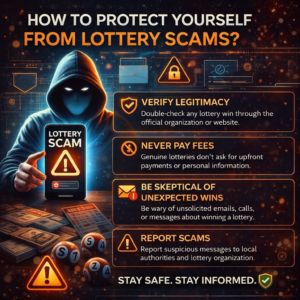
5 Ways to Protect Yourself from Lottery Scams
- Maintain a healthy skepticism toward unexpected win notifications, regardless of how official they appear.
- Keep your personal information secure and never share it in response to unsolicited communications.
- Use spam filters and security software to reduce exposure to phishing lottery emails.
- Educate family members, particularly those who may be more vulnerable, about common lottery scam tactics.
- Report any suspicious lottery notification immediately to a trusted fraud reporting platform.
Understanding the Legal Consequences of Lottery Scams
Lottery fraud is a serious criminal offense in most jurisdictions. Perpetrators can face charges including mail fraud, wire fraud, identity theft, and money laundering. However, the international nature of many lottery scam operations makes prosecution challenging. This is why financial fraud awareness and consumer reporting are so critical — law enforcement agencies rely on victim reports to build cases and coordinate with international partners.
Much like Types of Scams vary in method and jurisdiction, so do the legal frameworks for prosecuting them. Victims who have suffered financial losses should be aware that recovering funds is difficult, but not always impossible — especially when incidents are reported promptly and thoroughly documented.
When Should You Be Suspicious of a Lottery Win?
The honest answer is: always, initially. Genuine lottery wins are exceptionally rare, and legitimate organizations never contact winners out of the blue through informal channels. A legitimate lottery win involves documented proof of entry, official notification through verified channels, legal processing through licensed organizations, and no upfront fees of any kind. If any of these elements are missing, treat the notification as a potential lottery winner scam until proven otherwise.
How to Report a Lottery Scam Effectively?
If you believe you have encountered a lottery notification scam or have already been victimized, taking prompt action is essential. Reporting is not just about recovering your own losses — it is about preventing the next victim.
Steps to Report Lottery Fraud
- Document everything. Save all emails, text messages, call logs, receipts, and any other communications related to the scam. This evidence is critical for any investigation.
- Do not contact the scammer again. Further communication may compromise your safety or complicate any formal investigation.
- Report to relevant authorities. Depending on your country, this may include your national consumer protection agency, financial crimes authority, or internet crime division.
- Use a trusted online reporting platform. Scam reporting websites allow victims to submit details about lottery scam recovery and fraudulent operations, contributing to broader awareness and investigative efforts.
- Contact your bank. If you have transferred any money or shared financial details, contact your bank immediately to discuss next steps and potential protections.
Users can securely report suspicious lottery activity at scamsreport.net. Early reporting can help prevent further losses and contributes to a growing database of scam patterns that supports ongoing investigations.
Lottery Scam Recovery Help: What You Need to Know
Lottery scam victims often feel embarrassed, isolated, or hopeless after being defrauded. It is important to understand that these crimes are designed by professionals who exploit psychology — falling victim does not reflect a lack of intelligence or judgment. Scam recovery services and victim support organizations can provide guidance on next steps, though it is important to be cautious of fraudulent recovery services that target lottery scam victims a second time.
If you are facing withdrawal issues related to any financial platform, documenting and reporting the incident creates an official record that can support further action. Whether you are dealing with lottery fraud, investment scams, or other types of financial deception, the steps are largely the same: document, report, and seek guidance.
Take Action: Report a Lottery Scam Today
Lottery scams thrive when victims stay silent. Every unreported case is an opportunity for fraudsters to continue targeting new victims. If you believe you have encountered a suspicious lottery notification, a fake sweepstakes offer, or have already suffered a financial loss due to lottery fraud, your experience matters.
Sharing the details of what happened — even if you are unsure whether it constitutes a formal scam — contributes to broader financial fraud awareness and helps investigators identify patterns that lead to enforcement action.
At Scamsreport.net, victims can file a complaint and share scam details in a safe, secure environment. Whether you are a victim of an advance fee lottery scam, have received fraudulent lottery calls, or are facing withdrawal issues with any financial platform, you are encouraged to submit your experience. Expert guidance is available, and early action — including thorough documentation and formal reporting — is always the most effective response.
You do not have to navigate this alone. Visit scamsreport.net to report a lottery scam, seek expert review, or simply learn more about protecting yourself from lottery fraud and other forms of online financial crime.
Are You a Victim of a Lottery Scam?
If you’ve fallen victim to a lottery scam, don’t panic. Contact the Scams Report for expert assistance. In addition to helping you recover your stolen money, we offer a free consultation to guide you through the process and ensure you know your rights. Let us help you reclaim your hard-earned money and take the first step toward justice today!
Visit our LinkedIn Page