
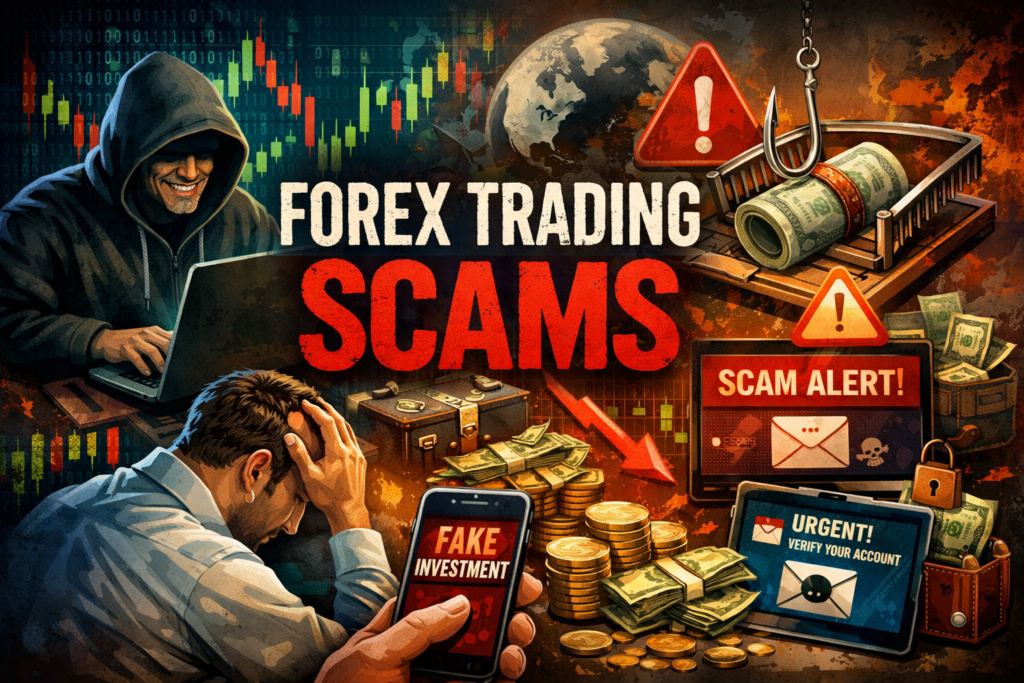
What is a Forex Trading Scam?
- Completely fake trading platforms that never execute real trades
- Legitimate-looking brokers who manipulate prices and refuse withdrawals
- Misrepresentation of regulatory status to appear trustworthy
- Fraudulent investment schemes disguised as forex opportunities
The Rise of Forex Scams in the Digital Age
How Technology Enabled Forex Scammers?
- Professional-looking websites created at minimal cost
- Sophisticated trading platforms that appear legitimate
- Social media and messaging apps provide direct access to millions.
- Advanced marketing materials that build false credibility
The Pandemic Effect
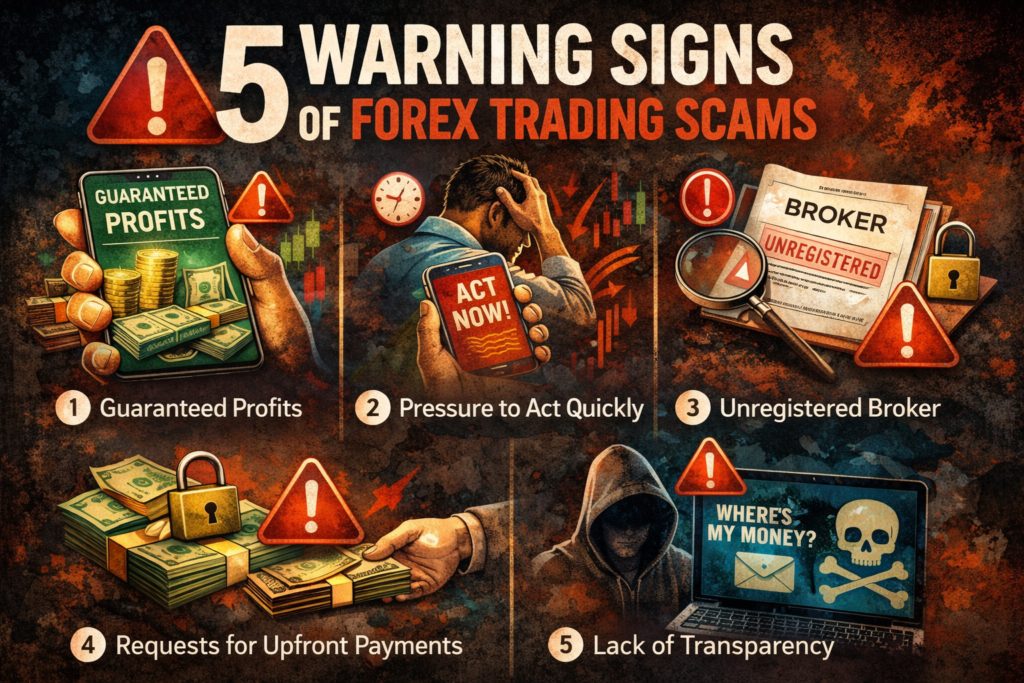
5 Warning Signs of Forex Trading Scams
1: Unrealistic Return Promises
What legitimate trading looks like:
- Professional traders typically achieve annual returns of 10-30% in successful years.
- Losing years also occurs regularly.
- No guarantees possible due to market volatility
Red flags indicating scams:
- Guaranteed returns or “zero risk” claims
- Consistent monthly profits exceeding 5-10%
- Promises of doubling money quickly
- Claims of secret strategies that “always work.”
2: High-Pressure Tactics
Legitimate broker behavior:
- Allows time for research and consideration
- Provides transparent information
- Respects your decision-making timeline
Scammer pressure tactics:
- Limited-time offers that expire soon.
- Claim opportunities are closing immediately.
- Repeated contact pushing for immediate decisions
- Emotional manipulation about financial security
3: Lack of Proper Regulation
Proper regulatory requirements:
- United Kingdom: FCA authorization required
- Australia: ASIC licensing mandatory
- United States: CFTC registration and NFA membership
Red flags:
- Operating without any regulation
- False claims of regulatory approval
- Fake regulatory certificates were displayed.
- Registration in weak regulatory jurisdictions only
4: Withdrawal Difficulties
Normal withdrawal process:
- Processing within 2-5 business days
- Standard verification requirements (ID, proof of address)
- No unexpected fees
Scam withdrawal tactics:
- Repeated delays without a clear explanation
- Excessive documentation requests
- Unexpected “withdrawal fees” or “taxes” payable to the broker
- Requirements for additional deposits to process withdrawals
5: Unsolicited Contact
8 Red Flags to Watch Out for in Forex Trading
1: No Verifiable Physical Address
- Legitimate brokers maintain actual offices with complete contact information.
- Suspicious: Only PO boxes, virtual offices, or no address provided
2: Anonymous Ownership
- Legitimate operations disclose corporate structure and key personnel.
- Suspicious: Cannot determine who operates the platform.
3: Fake Testimonials and Reviews
- Stock photos used for “satisfied clients.”
- Exclusively positive reviews with no criticism
- Photos that appear elsewhere online via reverse image search
4: Unusual Payment Methods Required
- Payment exclusively through cryptocurrency
- Wire transfers to personal accounts
- Money transfer services only
5: Copied Content from Legitimate Brokers
- Website designs stolen from real brokers
- Search for similar text online to detect copying.
6: Bonus Schemes with Impossible Conditions
- Extremely attractive offers (100%+ bonuses)
- Withdrawal conditions are designed to be impossible.
- Fine print that traps deposited funds
7: Poor Communication Quality
- Communication is limited to messaging apps only.
- Extremely slow response times
- Unprofessional language
8: Aggressive Account Managers
- Constant pressure for larger deposits
- Claims that bigger accounts guarantee profits
- Focus exclusively on deposit amounts.
What Are the Most Common Forex Trading Scams?
1. Fake Forex Brokers
Avoid by: Verifying regulatory status directly with regulatory bodies.
2. Signal Seller Scams
Avoid by: Being skeptical of guaranteed accuracy claims.
3. Forex Robot Scams
Avoid by: Understanding profitable automated systems aren’t sold publicly.
4. Account Management Fraud
Avoid by: Never granting account access to unverified individuals.
5. Forex Ponzi Schemes
Avoid by: Recognizing that payment of returns doesn’t prove legitimate trading.
6. High-Yield Investment Programs (HYIPs)
Avoid by: Understanding that such returns are impossible to sustain.
7. Fake Regulatory Credentials
Avoid by: Verifying claims directly with regulatory databases.
8. Spread Manipulation and Hidden Fees
Avoid by: Reviewing all fee schedules and reading independent reviews.
9. Recovery Scams
Avoid by: Understanding legitimate recovery requires legal processes, not upfront payments.
10. Social Media Trading Guru Scams
Avoid by: Understanding successful traders rarely market this way.
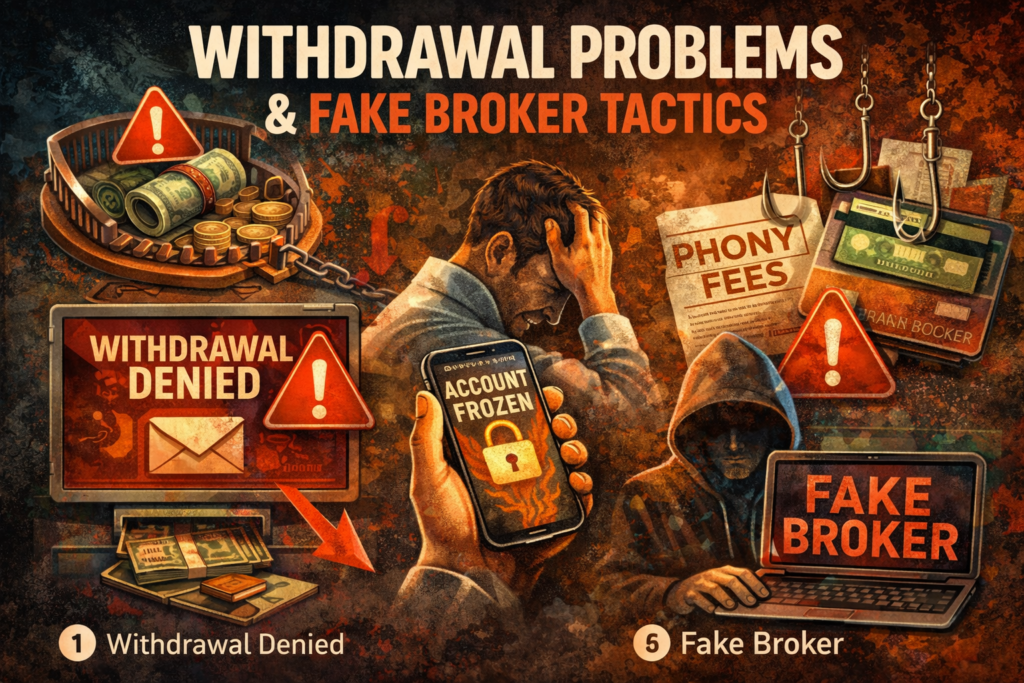
Withdrawal Problems & Fake Broker Tactics
Common Withdrawal Prevention Tactics
Perpetual Verification Requests:
- Request document after document
- Always find new requirements when you comply.
- Create an endless loop preventing withdrawal.
Unexpected Fees:
- “Withdrawal processing fees” were not mentioned during the deposit.
- “Taxes” that must be paid to the broker before releasing funds
- “Administrative charges” for accessing your money
Minimum Trade Volume Requirements:
- You must execute certain trades before withdrawing.
- Requirements not disclosed during the deposit.
- Designed to drain accounts through trading
The Trust-Building Withdrawal:
- Initially, allow small withdrawals successfully.
- Encourage larger deposits based on withdrawal success.
- Prevent larger withdrawal attempts later.
Step-by-Step Guide to Recognizing Forex Trading Fraud
Step-by-Step Verification Process
Step 1: Identify Claimed Regulation
- Check what regulatory authorization the broker claims.
- Note the specific regulatory body and registration number.
Step 2: Verify Directly with the Regulator
- FCA (UK): Search FCA Financial Services Register
- ASIC (Australia): ASIC Professional Registers
- CFTC/NFA (USA): NFA BASIC System
Step 3: Confirm Matching Details
- Verify the company name, registration number, and address match exactly.
- Scammers sometimes use similar names to legitimate companies.
Step 4: Check Current Regulatory Status
- Confirm currently authorized (not expired)
- Check for regulatory sanctions or warnings.
- Review disciplinary action history.
Step 5: Understand Jurisdiction Limitations
- Confirm that your specific account will be with the regulated entity.
- Some brokers use offshore subsidiaries with weaker oversight.
Best Practices for Safe Forex Trading
1: Educate Before You Invest
- Understand forex fundamentals, trading concepts, and risk management.
- Use educational resources from regulatory bodies.
- Learn realistic return expectations.
2: Start with Demo Accounts
- Test platforms without financial risk
- Develop strategies and competence.
- Evaluate broker reliability before depositing.
3: Research Thoroughly and Independently
- Seek independent reviews on multiple platforms like Trustpilot.
- Participate in trader forums.
- Be skeptical of exclusively positive feedback.
4: Start with Minimal Deposits
- Begin with the smallest acceptable deposit.
- Test the withdrawal process with a small amount first.
- Evaluate actual trading conditions.
5: Understand and Limit Leverage
- Use conservative leverage (5:1 to 10:1 for beginners)
- High leverage amplifies both gains and losses dramatically.
- Never max out margin capacity.
6: Maintain Realistic Expectations
- Most retail traders lose money.
- Forex trading involves substantial risk.
- Professional success takes years to develop.
- Don’t trade money you can’t afford to lose.
What To Do If You’ve Been Scammed?
Immediate Steps
1: Stop All Further Engagement
- Cease deposits completely regardless of promises.
- Continue documentation only
- Don’t provide additional personal information.
2: Gather Comprehensive Evidence
- All account statements and trade confirmations
- Complete communication logs
- Payment records and receipts
- Website screenshots and promotional materials
3: Attempt Legitimate Dispute Processes
- Contact your card issuer for chargebacks.
- Report to your bank immediately
- File payment processor disputes
- Act quickly, as time limits apply.
4: Protect Against Further Targeting
- Be extremely skeptical of “recovery services.”
- Most recovery specialists are secondary scams.
- Never pay upfront fees for recovery.
Where to Report Forex Trading Scams?
Why Reporting Matters?
- Creates official records that may support an investigation
- Helps identify and warn about fraudulent operations
- Contributes to broader awareness that protects potential future victims
- May trigger action when multiple complaints emerge about the same operation
Report Forex Scams at Scams Report
What to include when reporting:
- Complete broker details (name, website, contact information)
- Your experience timeline and account information
- Evidence (screenshots, communications, payment records)
- Specific tactics employed (withdrawal issues, false promises, pressure tactics)
- Names of individuals or account managers involved
Why Reporting Matters?
- Creates official records that may support an investigation
- Helps regulatory bodies identify and warn about fraudulent operations
- Contributes to broader awareness that protects potential future victims
- May trigger action when multiple complaints emerge
Taking Action: Protecting Yourself and Others
Forex trading scams continue thriving through psychological manipulation and technical deception, exploiting people’s legitimate desires for financial growth and security. Recognizing warning signs, verifying broker credentials, maintaining realistic profit expectations, and following safe trading practices are your strongest defenses against such schemes.
Scammers depend on victims not understanding how legitimate forex markets operate or what proper broker behavior looks like. When you educate yourself about regulatory requirements, normal trading conditions, and common scam tactics, you eliminate the information advantage fraudsters exploit.
If you’ve experienced suspicious forex broker activities, file a complaint to protect yourself and countless potential future victims.
Whether you’re currently struggling with withdrawal denials, have discovered false regulatory claims, or recognize the deceptive patterns outlined in this comprehensive guide, documenting and reporting creates the evidence trail that exposes fraudulent operations.
Scams Report offers a dedicated platform for filing forex scam complaints and sharing detailed experiences with supporting documentation. Your complaint, including specific broker information, a timeline of events, communication records, and evidence collected, helps build a public database that enables others to identify fraudulent brokers before losing money.
Filing a complaint extends beyond seeking personal recovery – it strengthens collective defense. Forex scams operate most successfully when victims remain silent. Public complaints and shared documentation create the transparency that disrupts fraudulent operations.
Quick complaint filing helps authorities and platforms identify emerging fraud patterns before additional victims suffer losses. If withdrawal problems, deceptive practices, or obvious fraud indicators have affected you, file a complaint immediately. Your documented complaint, supported by thorough evidence, enhances awareness and protection for the entire trading community.