
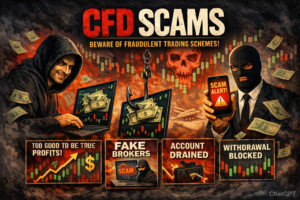
CFD scams have become a growing concern for traders and investors worldwide. Contract for Difference trading offers opportunities for profit, but it also attracts fraudulent operators who exploit unsuspecting individuals. Understanding what CFD scams are, how they work, and how to protect yourself is essential for anyone involved in online trading. This guide provides practical insights into CFD scams and investor protection, helping you navigate the complex world of speculative trading with confidence.
What Are CFD Scams and How Do They Work?
CFD scams explained simply: these fraudulent schemes involve deceptive CFD trading platforms that manipulate prices, refuse withdrawals, or disappear with investor funds. A contract for difference scam typically begins with attractive promises of high returns and minimal risk. Scammers create sophisticated-looking websites that mimic legitimate brokers, making it difficult for beginners to distinguish between authentic and fake CFD investment platforms.
The mechanics of CFD trading scams are straightforward yet devastating. Fraudsters target individuals through aggressive marketing, often using social media, fake testimonials, and celebrity endorsements. Once victims deposit funds, they may initially see profits on their accounts. However, these gains are often fictional, displayed on rigged CFD trading software designed to encourage larger deposits. When investors attempt to withdraw their money, they encounter endless obstacles, additional fee requests, or complete silence from the broker.
Understanding how CFD scams work is the first step toward protection. These schemes exploit the complexity of financial markets and the legitimate appeal of CFD trading. Unlike various types of scams that operate across different sectors, CFD fraud specifically targets those seeking investment opportunities in derivatives trading. Similar to what are the most common forex trading scams, CFD scams use sophisticated manipulation tactics to deceive investors.
Why Are CFD Scams on the Rise?
Several factors contribute to the increasing prevalence of CFD scams. The accessibility of online trading platforms has democratized investing, but it has also lowered barriers for fraudulent operators. Unregulated CFD brokers can establish operations quickly with minimal oversight, particularly in jurisdictions with weak financial regulations.
The global nature of online trading creates enforcement challenges. While legitimate brokers operate under strict trading regulatory oversight, scammers exploit regulatory gaps by operating from countries with lax financial laws. The COVID-19 pandemic accelerated online financial activity, bringing new traders into the market with varying levels of experience. This influx created opportunities for scammers to target beginners researching CFD safety who may not recognize CFD scam warning signs. The situation mirrors trends seen in why cryptocurrency scams are on the rise, where technological advancement and increased interest create fertile ground for fraudulent activity.
5 Warning Signs of CFD Scams You Should Know
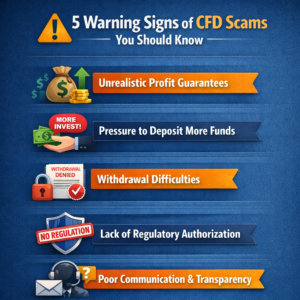
Recognizing CFD scam red flags can save you from significant financial losses. Here are the critical warning signs that should immediately raise concern:
- Unrealistic Profit Guarantees: Legitimate brokers never promise guaranteed returns. If a platform claims you can earn consistent profits with no risk, you’re likely looking at a CFD broker scam warning. All trading involves risk, and any suggestion otherwise is a clear red flag indicating a CFD scam.
- Pressure to Deposit More Funds: Scammers use high-pressure tactics to encourage larger deposits. They may claim that bigger investments unlock special features, better returns, or priority withdrawals. This aggressive approach contrasts sharply with legitimate brokers who emphasize risk management and responsible trading.
- Withdrawal Difficulties: One of the most obvious CFD scam examples online involves platforms that create obstacles when you try to withdraw funds. Excuses range from technical issues to requests for additional verification documents, taxes, or fees. If you are facing withdrawal issues, document and report the incident immediately.
- Lack of Regulatory Authorization: Operating without proper licensing is a major red flag. Check whether the broker is registered with recognized financial authorities. Unregulated CFD brokers operate outside legal frameworks, offering no protection if things go wrong.
- Poor Communication and Transparency: Legitimate brokers maintain professional communication channels and provide clear information about fees, risks, and terms. If contact information is vague, customer service is unresponsive, or terms and conditions are confusing or missing, exercise extreme caution.
If you suspect a CFD broker is misleading you, consider reporting it early. Early reporting can help prevent further losses and protect other potential victims from falling into the same trap.
7 Common Tactics Used in CFD Scams
Understanding deceptive CFD trading platforms requires familiarity with the specific tactics scammers employ:
- Fake Testimonials and Reviews: Scammers create elaborate networks of fake reviews, testimonials, and success stories. They may use stock photos or fabricated identities to build credibility. This tactic appears across multiple fraud categories, similar to what are phishing scams and how they work, where authenticity is manufactured to build trust.
- Clone Websites: Sophisticated scammers copy the design and branding of legitimate, regulated brokers. They use similar domain names with slight variations, making it easy for victims to believe they’re dealing with a reputable company.
- Bonus Schemes and Promotions: While legitimate brokers may offer promotions, scammers use unrealistic bonuses to lure deposits. These bonuses often come with impossible withdrawal conditions buried in fine print.
- Account Manager Manipulation: Victims are assigned “account managers” or “trading coaches” who provide personalized attention and advice. These individuals are actually salespeople trained to extract maximum deposits while creating the illusion of expertise and care.
- Trading Signals and Software: Scammers sell or provide “exclusive” trading software, algorithms, or signal services that supposedly guarantee profits. These tools are worthless or programmed to generate fake results visible only on the scam platform.
- Identity Theft Through Verification: Under the guise of regulatory compliance, some scammers request extensive personal documentation. They use this information for identity theft or to create additional fraudulent schemes.
- Exit Scams: In the final stage, scammers simply disappear. The website goes offline, communication stops, and victims are left with no recourse. This mirrors tactics seen across various types of scams, where operators vanish once they’ve extracted sufficient funds.
Top 10 Tips to Avoid CFD Scams
Protecting yourself requires proactive measures and informed decision-making. Here are essential CFD fraud prevention tips:
- Verify Regulatory Status: Always confirm that a broker is licensed by recognized authorities such as the FCA, ASIC, CySEC, or other respected financial regulators. Check registration numbers directly on the regulator’s website.
- Research Thoroughly: Conduct comprehensive due diligence before trading. Search for independent reviews, check forums, and look for any complaints or warnings about the broker. A simple internet search can reveal scam examples online associated with specific platforms.
- Start Small: Never invest large amounts with a new broker. Test the platform with the minimum deposit to assess their service, execution quality, and withdrawal process.
- Test Withdrawals Early: Make a small withdrawal shortly after opening your account. A legitimate broker processes withdrawals smoothly. Any difficulties at this stage indicate serious problems.
- Avoid Unsolicited Offers: Be wary of cold calls, emails, or social media messages promoting CFD trading opportunities. Legitimate brokers don’t typically use aggressive outbound marketing to acquire clients.
- Read Terms Carefully: Review all terms, conditions, and fee structures before depositing. If information is unclear, vague, or contradictory, do not proceed.
- Check Domain Age and Details: Use online tools to verify when a website was created. Scam sites are often very new. Also check for professional email addresses, physical addresses, and proper company registration details.
- Be Skeptical of “Too Good to Be True” Claims: If promised returns seem unrealistic, they almost certainly are. Online trading scam protection begins with healthy skepticism toward extraordinary claims.
- Use Regulated Payment Methods: Credit cards and regulated payment processors offer some level of protection and chargeback possibilities. Avoid wire transfers, cryptocurrency, or untraceable payment methods for initial deposits.
- Trust Your Instincts: If something feels wrong, it probably is. High-pressure tactics, evasiveness, or any red flags should prompt you to walk away regardless of how attractive the opportunity seems.
Users can securely report suspicious CFD activity through dedicated platforms that collect evidence and coordinate with financial authorities. Taking this step contributes to broader online trading scam protection efforts and helps prevent others from becoming victims.
When Should You Be Concerned About CFD Scams?
Certain situations should immediately trigger concern:
Unsolicited Contact: If you receive unexpected communication promoting CFD trading, especially through social media, exercise extreme caution. This approach mirrors what are the most common forex trading scams and what are phishing scams and how they work.
Reluctance to Provide Information: If a broker avoids answering questions about regulation, fees, or risks, this indicates serious problems.
Technical Issues During Withdrawals: Consistent “technical problems” that prevent withdrawals but never affect deposits are a clear CFD scam warning.
Requests for Additional Payments: Any request for taxes or fees before you can withdraw funds is typically fraudulent.
If you believe you’ve encountered a suspicious broker or misleading CFD scheme, documenting everything is crucial. Save all communications, transaction records, and website screenshots.
CFD Scams: Lessons Learned from Victims
Real experiences from CFD scam victims provide valuable insights. Many victims report being initially skeptical but were won over by persistent “account managers” who built rapport over weeks or months. This manipulation technique appears in various fraud types, including how to report and recover from a romance scam, where emotional manipulation facilitates financial exploitation.
Victims commonly experience the “sunk cost fallacy,” investing more money trying to reach withdrawal thresholds. Scammers deliberately exploit this psychology. Another recurring theme is isolation—many don’t discuss trading activities with family or friends until after significant losses occur.
Understanding that scams are sophisticated criminal operations, not personal failings, is important for recovery. Similar to how to report and recover from investment scams, seeking help early improves outcomes.
9 Ways to Protect Yourself from CFD Fraud
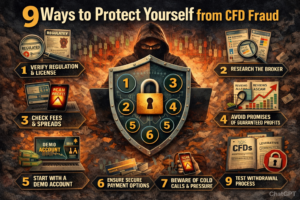
Beyond avoiding scams, protecting yourself involves building knowledge and maintaining vigilance:
- Educate Yourself Continuously: Understanding legitimate CFD trading helps you recognize when something is wrong. Learn about realistic return expectations and proper risk management.
- Use Demo Accounts: Legitimate brokers offer demo accounts for practice trading with virtual money. Scammers rarely offer genuine demo accounts.
- Verify Everything Independently: Don’t rely solely on broker information. Independently verify regulatory status and company registration.
- Maintain Emotional Control: Scammers exploit emotions like greed and fear. Make decisions based on research and logic.
- Keep Detailed Records: Document all interactions and transactions. This creates evidence useful for reporting and potential recovery efforts.
- Understand Your Rights: Familiarize yourself with consumer protection laws and financial regulations in your jurisdiction.
- Network with Other Traders: Engage with legitimate trading communities where experienced traders share knowledge and identify scams quickly.
- Review Statements Carefully: Regularly review account statements. Discrepancies can indicate manipulation or fraud.
- Separate Investment Research: Don’t use promotional materials as your sole research source. Consult independent financial websites and regulatory warnings.
Implementing these protective measures significantly reduces your vulnerability to deceptive CFD trading platforms.
How CFD Scams Can Ruin Your Trading Experience?
Beyond financial losses, CFD scams create lasting negative impacts. Victims often develop extreme risk aversion, missing legitimate opportunities because they no longer trust any investment platform. The psychological impact manifests as anxiety about money and investing that persists long after the incident.
Relationships can suffer significantly if victims invested shared money or borrowed funds. The stress can strain marriages and damage family relationships. These broader consequences underscore why CFD scam protection goes beyond simple financial caution—it’s about protecting your overall wellbeing.
Where to Report CFD Scams?
Knowing where to report CFD scams is crucial for both personal recourse and protecting others. Multiple channels exist for reporting fraudulent CFD operations:
- Financial Regulators: Report to the relevant financial authority in your jurisdiction. In the UK, this is the Financial Conduct Authority (FCA); in the US, the Commodity Futures Trading Commission (CFTC) and SEC; in Australia, ASIC. These agencies investigate fraud and issue warnings that protect other investors.
- Law Enforcement: File a police report, even if you believe they can’t recover your money. Reports contribute to databases that help identify criminal networks and may lead to eventual prosecutions.
- Consumer Protection Agencies: Organizations like the Federal Trade Commission (FTC) in the US or similar agencies in other countries collect scam reports and coordinate enforcement actions.
- Online Fraud Databases: Platforms that collect and share information about scams help others avoid similar schemes. Contributing your experience to these databases serves the broader community.
- Banking Institutions: If you used a credit card or bank transfer, report the fraud to your financial institution. While chargebacks aren’t always successful, they’re worth pursuing, and banks track fraud patterns.
- Dedicated Scam Reporting Platforms: Specialized platforms like scamsreport.net guides us how to report a scam online and provide structured ways to document and report CFD scams, helping build comprehensive records that support regulatory and law enforcement actions.
The more detailed your report, the more useful it becomes. Include all relevant information: broker names, website URLs, contact details, transaction records, communications, and a timeline of events. This documentation helps authorities identify patterns and potentially track down perpetrators.
How Can You Protect Yourself from CFD Scams?
Protection requires a multi-layered approach:
- Develop Financial Literacy: Understanding basic investment principles helps you recognize unrealistic promises. No legitimate investment guarantees returns without risk.
- Create Personal Rules: Establish investment rules such as: never invest with unlicensed brokers, never invest more than you can afford to lose, always test withdrawals before large deposits.
- Build a Support Network: Discuss opportunities with trusted friends or advisors before committing funds. Outside perspectives often identify red flags you might miss.
- Stay Informed: Follow financial scam alerts from regulatory bodies. These organizations regularly publish warnings about specific scams.
- Question Everything: Why is this opportunity being presented to you? How does the broker make money? If you can’t get clear answers, don’t proceed.
- Verify Through Multiple Sources: Cross-reference information through regulatory databases, independent review sites, and trader forums.
The goal isn’t to avoid all risk but to ensure you’re taking calculated risks with legitimate, regulated brokers.
Protect Yourself: How to Recognize CFD Scams
Recognition is your first line of defense. Here are specific patterns to watch for:
Communication Patterns: Scammers use urgency, exclusivity, and flattery. Legitimate brokers use professional, measured communication without pressure tactics.
Website Indicators: Red flags include missing contact information, no physical address, recent domain registration, poor spelling, absence of risk warnings, and incomprehensible terms.
Behavioral Red Flags: Evasiveness or pressure when you ask about regulation, fees, or withdrawal procedures indicates problems.
Social Proof Inconsistencies: Fake testimonials show patterns—stock photos, overly enthusiastic language, no verifiable details. Real reviews include balanced perspectives with specific details.
Financial Request Patterns: Red flags include unusual payment methods, pressure to deposit before verification, requests for additional payments to access withdrawals, or bonus structures with impossible withdrawal conditions.
Take Action: Report CFD Scams and Protect Others
CFD scams thrive when victims stay silent. Embarrassment or hopelessness often prevents reporting, but reporting serves crucial purposes beyond personal recovery.
When you report a CFD scam, you create an official record that helps authorities identify criminal networks. Individual reports may seem isolated, but combined with others, they reveal patterns leading to investigations and enforcement actions.
Reporting also contributes to public awareness. Regulatory agencies use complaint data to issue warnings protecting other potential victims. From a personal perspective, reporting is an important step in psychological recovery, transforming you from passive victim to active participant in fighting fraud.
If you believe you’ve encountered a suspicious broker or misleading CFD scheme, documenting and reporting the incident is crucial. Gather all evidence: screenshots, emails, transaction records, website pages, and promotional materials. Organize this chronologically to create a clear narrative.
Consider reporting through multiple channels: financial regulators, law enforcement, consumer protection agencies, and dedicated scam reporting platforms. Each channel serves different purposes, broadening the protective effect of your report.
Remember that reporting doesn’t require proving the scam definitively. If you have reasonable suspicions based on warning signs discussed in this guide, those suspicions warrant reporting.
Your experience contains valuable information that can prevent others from suffering similar losses. Don’t let embarrassment prevent you from reporting. Every report matters. If you’ve been affected by a CFD scam or suspect fraudulent activity, visit scamsreport.net to file a complaint and add your voice to the fight against financial fraud. Your action today could save someone else tomorrow.
If you’ve fallen victim to CFD scams, take immediate action by filing a complaint through our website. We provide free consultations to report financial scam online on the fund recovery process. Our dedicated team is committed to assisting victims of various scams, offering invaluable guidance and support to facilitate the retrieval of your funds.
Visit our LinkedIn Page