

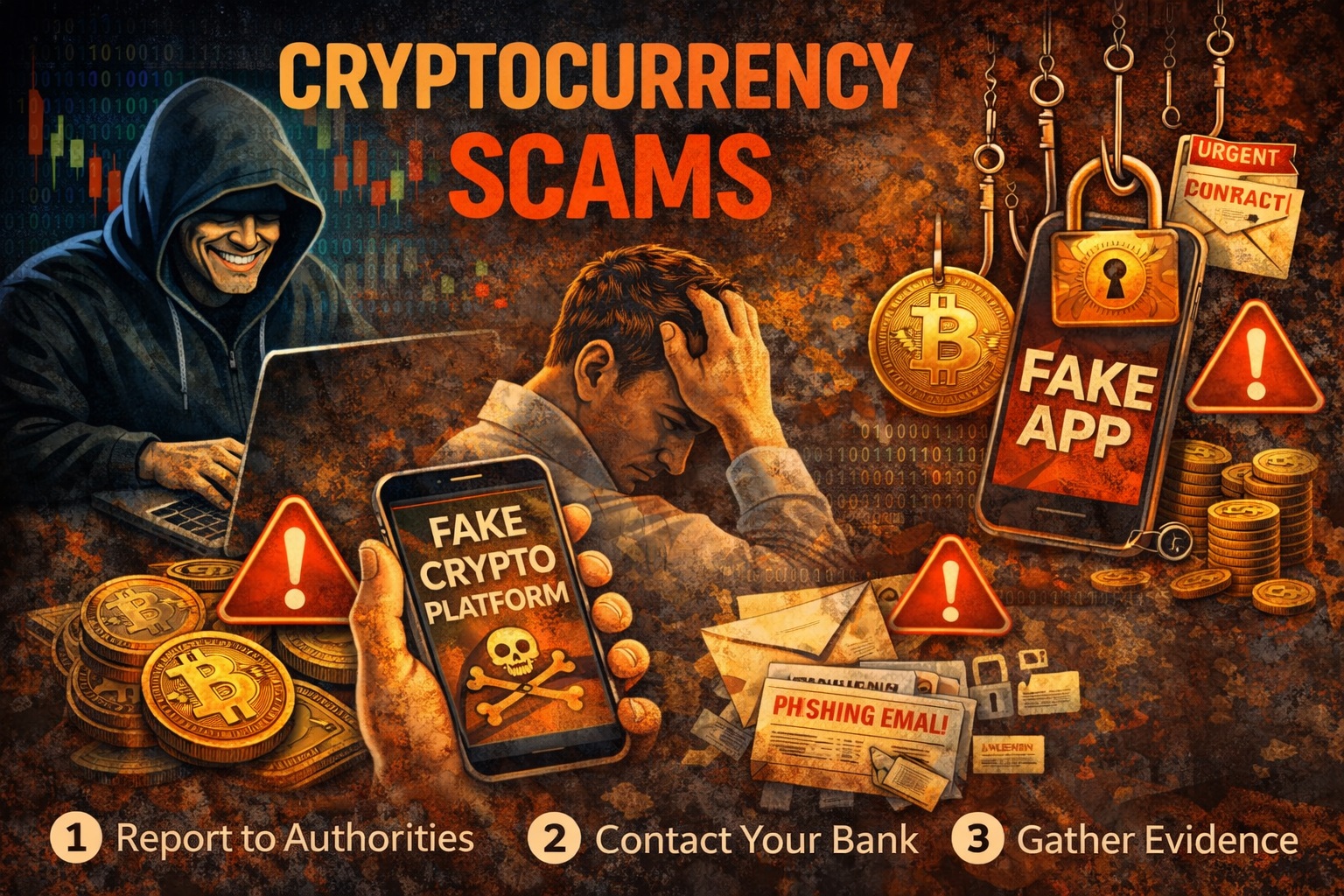
Cryptocurrency has revolutionized the financial landscape, offering unprecedented opportunities for investment and financial independence. However, this has also attracted sophisticated scammers who exploit the decentralized nature of blockchain technology to perpetrate various types of scams. As cryptocurrency adoption accelerates globally, understanding how to identify and avoid cryptocurrency scams has become essential for anyone participating in this evolving market.
The anonymity and irreversibility of cryptocurrency transactions create unique challenges for investors. Unlike traditional banking systems, where fraudulent transactions can often be reversed, cryptocurrency transfers are permanent once confirmed on the blockchain. This characteristic makes cryptocurrency particularly attractive to scammers and underscores the importance of vigilance and education in protecting your digital assets.
What Are Cryptocurrency Scams?
Cryptocurrency scams are fraudulent schemes designed to steal digital assets or personal information from unsuspecting victims. These scams exploit the complexity and relative novelty of blockchain technology, preying on investors who may lack technical knowledge or experience in the crypto space. Understanding the fundamental nature of cryptocurrency fraud is the first step toward protecting yourself from financial loss.
The scope of crypto investment scams ranges from simple phishing attempts to elaborate Ponzi schemes involving fake exchanges and fraudulent initial coin offerings. Scammers continuously adapt their tactics, making it crucial for investors to stay informed about the latest crypto scam tactics and maintain skepticism when presented with investment opportunities that seem too good to be true.
Why Are Cryptocurrency Scams on the Rise?
Several factors contribute to the proliferation of online crypto scams. The rapid growth of the cryptocurrency market has attracted millions of new investors, many of whom lack the experience to identify red flags. This influx of newcomers creates a target-rich environment for fraudsters seeking to exploit gaps in knowledge and understanding.
The decentralized and pseudonymous nature of blockchain transactions makes it difficult to trace stolen funds or identify perpetrators. Additionally, the lack of comprehensive regulation in many jurisdictions leaves investors with limited recourse when they fall victim to cryptocurrency fraud. The global reach of digital currencies allows scammers to operate across borders, further complicating law enforcement efforts.
Market volatility and the promise of quick profits create psychological conditions that scammers exploit. When investors see legitimate cryptocurrencies experiencing dramatic price increases, they become more susceptible to fraudulent schemes promising similar returns. This combination of factors has contributed to a significant increase in reported cryptocurrency scams over recent years.
7 Warning Signs of Cryptocurrency Scams
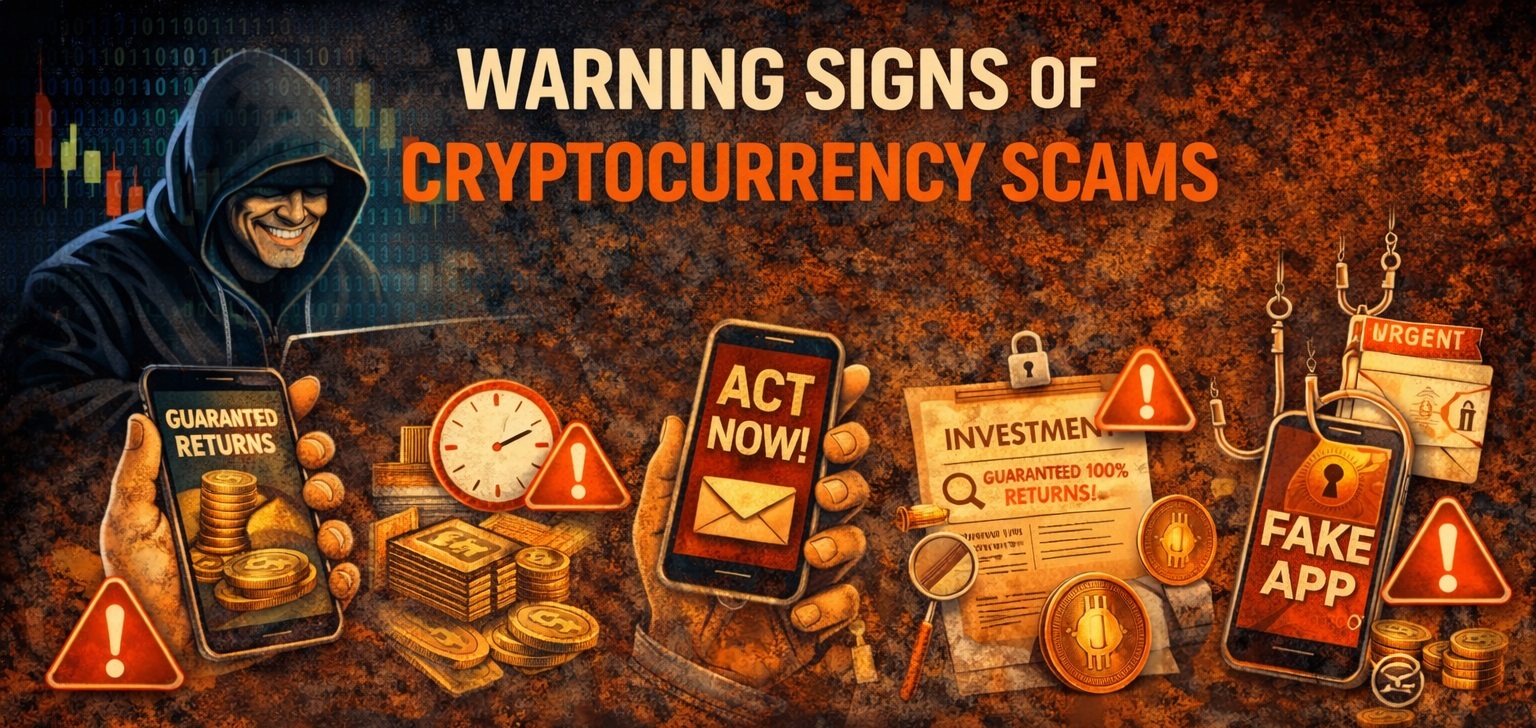
Recognizing the signs of a crypto scam can help you avoid becoming a victim. While scammers continuously develop new tactics, certain red flags consistently indicate fraudulent activity. Being aware of the warning signs of scam brokers is essential for anyone involved in cryptocurrency trading or investment.
1. Guaranteed Returns or Unrealistic Promises
Legitimate investments carry inherent risks, and no one can guarantee specific returns in the volatile cryptocurrency market. If someone promises guaranteed profits, consistent high returns, or risk-free investment opportunities, you are likely dealing with a scam. Be especially wary of schemes claiming to double your investment in a short timeframe or offering returns that significantly exceed market averages.
2. Pressure to Act Immediately
Scammers frequently create artificial urgency to prevent victims from conducting proper research or seeking advice. They may claim that an investment opportunity is available for a limited time only or that you must act immediately to secure special pricing. This high-pressure tactic is designed to override rational decision-making and should always raise suspicion. Legitimate investment opportunities allow time for due diligence.
3. Unsolicited Contact or Social Media Outreach
Many cryptocurrency scams begin with unsolicited messages through social media platforms, email, or messaging apps. Scammers may impersonate legitimate companies, celebrities, or successful investors to build credibility. They often target individuals who have shown interest in cryptocurrency through their online activity. Similar to how social media scams affect consumers and brands, crypto-related fraud leverages these platforms to reach potential victims. Be skeptical of any unexpected investment opportunities, especially those initiated through direct messages or comments.
4. Lack of Transparency or Regulatory Compliance
Legitimate cryptocurrency projects and exchanges provide clear information about their operations, team members, and regulatory status. If a platform lacks transparency about its ownership, location, or licensing, proceed with extreme caution. Check whether the exchange or investment platform is registered with appropriate regulatory bodies like the FCA from the UK, ASIC from Australia, etc., and verify the credentials of anyone soliciting your investment.
5. Withdrawal Issues or Restrictions
One of the most common indicators of a fraudulent platform is difficulty withdrawing funds. Scammers may impose unexpected fees, require additional deposits before allowing withdrawals, or create technical excuses for delays. If you encounter persistent withdrawal issues or find that accessing your funds requires additional payments, you may be dealing with a scam. Document all communication and transaction history immediately.
If you are facing withdrawal issues with a cryptocurrency platform, document every interaction and report the incident. Early action can sometimes prevent further losses and may help others avoid the same situation.
6. Requests for Personal Information or Private Keys
Legitimate cryptocurrency platforms never ask for your private keys, seed phrases, or passwords. These credentials should remain strictly confidential. Scammers may pose as customer support representatives requesting this information to “verify your account” or “resolve technical issues.” Any such request is a clear indication of fraud. Remember that whoever controls your private keys controls your cryptocurrency.
7. Poor Website Quality and Unprofessional Communication
While not definitive on its own, poor website design, grammatical errors, and unprofessional communication often accompany cryptocurrency scams. Legitimate projects invest in professional presentation and clear communication. Check for secure connections (HTTPS), verify domain registration details, and be suspicious of websites that closely mimic well-known exchanges but use slightly different URLs.
Most Common Cryptocurrency Scams
Understanding the specific tactics employed by scammers helps investors recognize and avoid these schemes. The following represent some of the most prevalent types of cryptocurrency fraud currently affecting the market.
Phishing Crypto Scams
Phishing attacks involve fraudulent communications designed to trick victims into revealing sensitive information or transferring cryptocurrency. These scams often take the form of fake emails or websites that mimic legitimate cryptocurrency exchanges or wallet providers. Phishing crypto scams may direct victims to fraudulent login pages that capture credentials or trick them into approving malicious smart contracts that drain their wallets.
To protect against phishing, always verify URLs carefully, enable two-factor authentication, and never click links in unsolicited emails. Bookmark legitimate exchange websites and access them directly rather than through search results or email links.
Fake Crypto Exchanges
Fraudulent exchanges appear legitimate but exist solely to steal deposited funds. These platforms may offer attractive features like low fees or exclusive tokens to attract users. Once victims deposit cryptocurrency, they find themselves unable to withdraw their assets. Fake crypto exchanges often disappear entirely after accumulating sufficient funds from victims.
Always research an exchange thoroughly before depositing funds. Check for regulatory licenses, read independent reviews, and start with small deposits to test withdrawal functionality before committing larger amounts.
Rug Pull Crypto Scams
Rug pull crypto scams involve developers abandoning a project and absconding with investors’ funds. This typically occurs with new tokens or DeFi projects where developers retain control over smart contracts or liquidity pools. The scammers generate hype around their project, encourage substantial investment, then withdraw all liquidity or execute malicious smart contract functions that transfer funds to their wallets.
Due diligence is essential when investing in new cryptocurrency projects. Examine smart contract code if possible, verify that liquidity is locked, check team credentials, and be wary of anonymous development teams with no track record.
Crypto Ponzi Schemes
Crypto Ponzi schemes promise high returns paid from funds contributed by new investors rather than legitimate business profits. These scams maintain the illusion of success by paying early investors with money from later participants. Eventually, the scheme becomes unsustainable when new investment slows, and the operator disappears with remaining funds.
Crypto Romance Scams
Romance scams involve criminals building fake romantic relationships with victims before manipulating them into investing in fraudulent cryptocurrency schemes. These scammers spend weeks or months developing trust through online communication before introducing investment opportunities. Victims often lose substantial amounts as scammers convince them to invest increasing sums in fake platforms.
Much like learning how to report and recover from a romance scam in traditional contexts, cryptocurrency romance scams require immediate action once discovered. Be extremely cautious about financial advice from online relationships, especially if the person cannot meet in person or makes excuses about video calls. Never send cryptocurrency to someone you have only met online, regardless of the relationship’s perceived depth.
Crypto Giveaway Scams
Giveaway scams promise free cryptocurrency in exchange for a small initial payment or personal information. Scammers often impersonate celebrities or legitimate companies on social media, claiming to multiply any cryptocurrency sent to a specific address. These crypto giveaway scams exploit the fear of missing out and the appeal of free money.
Legitimate cryptocurrency giveaways never require upfront payment. If you must send cryptocurrency to receive more, it is always a scam. Verify any giveaway announcement through official company channels before participating.
NFT Scams and DeFi Scams
The emergence of NFTs and decentralized finance has created new opportunities for fraud. NFT scams include fake marketplaces, counterfeit NFTs, and projects that disappear after minting. DeFi scams often involve malicious smart contracts that drain connected wallets or fake yield farming opportunities promising unrealistic returns.
These blockchain fraud schemes exploit the technical complexity of smart contracts and the rapid pace of innovation in the cryptocurrency space. Always verify smart contract addresses, research project teams thoroughly, and never approve unlimited spending limits for unknown contracts.
Bitcoin Scams and Other Cryptocurrency Fraud
While Bitcoin remains the most recognized cryptocurrency, it is frequently used in various scams. Bitcoin scams range from fake mining operations to fraudulent investment funds claiming to trade Bitcoin profitably. Scammers also exploit Bitcoin’s reputation to lend legitimacy to fraudulent schemes involving lesser-known cryptocurrencies.
Remember that Bitcoin’s technology is secure, but human behavior and external platforms introduce vulnerabilities. The same principles for identifying scams apply regardless of which cryptocurrency is involved.
How to Identify Cryptocurrency Scams?
Developing the ability to identify cryptocurrency scams requires critical thinking and systematic evaluation of investment opportunities. Apply the following framework when considering any cryptocurrency investment or platform.
First, research the project thoroughly using multiple independent sources. Look for detailed information about the team, technology, and business model. Legitimate projects provide comprehensive documentation and maintain active communities where questions receive substantive answers. Check for red flags like anonymous teams, copied whitepapers, or vague technical descriptions.
Second, verify regulatory compliance and security measures. Determine whether the platform or project complies with relevant regulations in your jurisdiction. Check for security audits of smart contracts and examine the platform’s track record regarding security incidents. Legitimate operations invest in professional security and regulatory compliance.
Third, analyze the economic model and promised returns. Sustainable businesses generate revenue through legitimate means. Be skeptical of projects that cannot clearly explain their revenue model or that promise returns disconnected from underlying business performance. Compare promised returns to market benchmarks and question anything that seems disproportionately generous.
Understanding how scammers use crypto helps in detection. Many fraudsters exploit the complexity of blockchain technology to confuse victims. They may use technical jargon without substance or create the appearance of sophisticated trading strategies while actually operating simple theft schemes. If you cannot understand how a platform generates returns, do not invest.
10 Tips to Avoid Falling for Cryptocurrency Scams
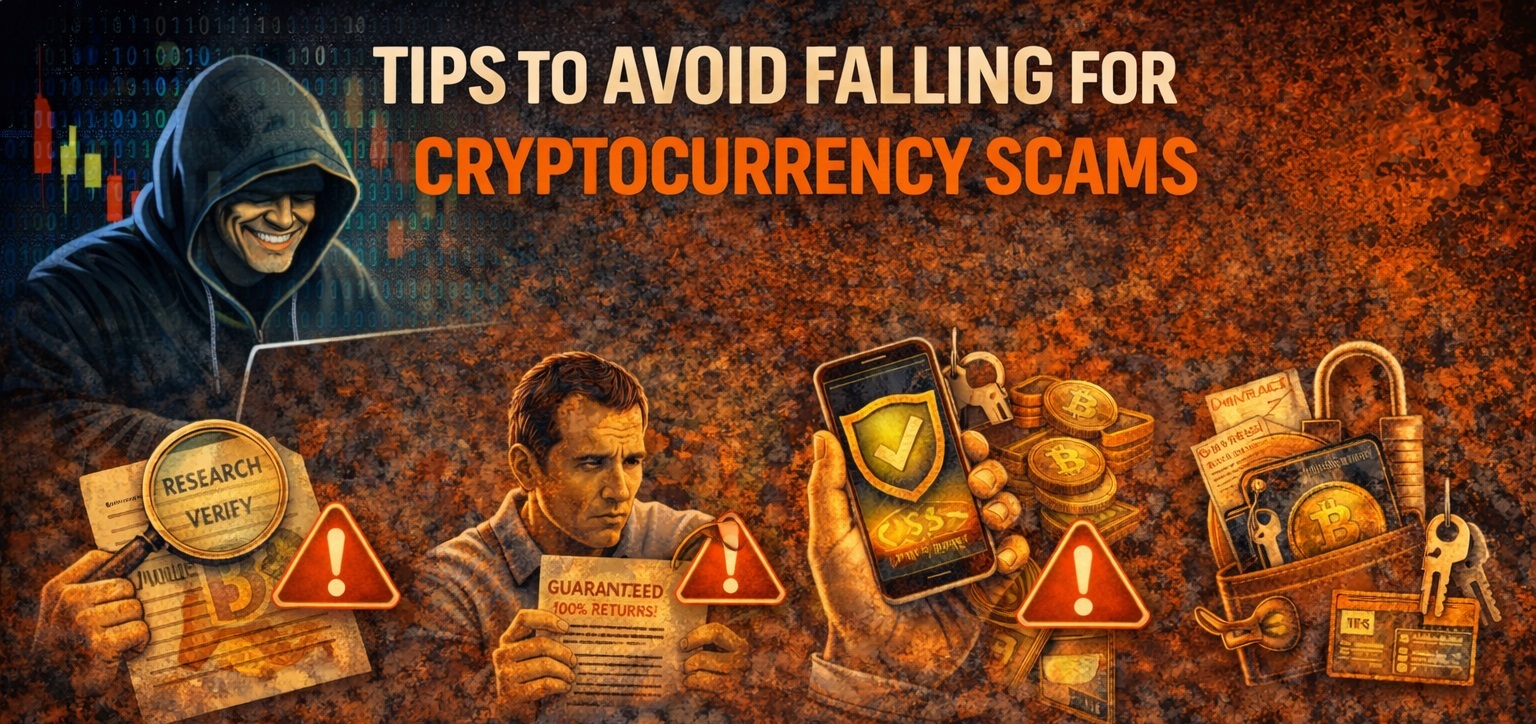
Prevention remains the most effective defense against cryptocurrency fraud. The following practices significantly reduce your risk of becoming a scam victim.
1. Conduct Thorough Research
Never invest based solely on recommendations from strangers or social media posts. Research every project independently using multiple sources. Read the whitepaper, examine the code if possible, and verify team credentials. Check cryptocurrency forums and news sites for discussions about the project. Legitimate opportunities withstand scrutiny.
2. Use Reputable Exchanges and Wallets
Stick to well-established, regulated cryptocurrency exchanges with proven security records. Research wallet options carefully and prefer hardware wallets for significant holdings. Avoid new platforms without track records, regardless of promised features or lower fees. The slight savings on fees are not worth the risk of losing your entire investment.
3. Enable Strong Security Measures
Implement two-factor authentication on all cryptocurrency accounts. Use strong, unique passwords for each platform. Consider hardware security keys for additional protection. Regularly update software and be cautious about which devices you use to access cryptocurrency accounts. Never access your accounts on public computers or unsecured networks.
4. Protect Your Private Keys
Your private keys and seed phrases should remain completely confidential. Write them down and store them securely offline. Never share them with anyone, including customer support representatives. No legitimate service needs your private keys. Consider using a hardware wallet to keep private keys offline and secure from hacking attempts.
5. Verify URLs and Communications
Always check website URLs carefully before entering credentials or approving transactions. Phishing sites often use URLs similar to legitimate exchanges with slight variations. Bookmark legitimate sites and access them directly. Be skeptical of unsolicited emails or messages claiming to be from cryptocurrency services. Verify any communication through official channels.
6. Start Small and Test Withdrawals
When using a new platform, begin with small deposits and test withdrawal functionality before committing larger amounts. This practice helps identify fraudulent platforms before significant losses occur. If withdrawal testing reveals problems or unexpected fees, do not deposit additional funds. Many scams become apparent when victims attempt their first withdrawal.
7. Be Skeptical of Unsolicited Opportunities
Treat all unsolicited investment opportunities with extreme skepticism. Legitimate investment opportunities rarely come through cold messages or social media contacts. Be especially wary of opportunities that find you rather than those you discover through your own research. Similar to how one must learn how to identify and avoid forex trading scams or understand a step-by-step guide to protecting yourself from investment scams, the same vigilance applies to cryptocurrency.
8. Understand the Technology
Invest time in understanding blockchain technology and how cryptocurrency works. This knowledge helps you evaluate projects more effectively and identify technical red flags. You do not need to become an expert, but a basic understanding of concepts like wallets, private keys, and blockchain transactions significantly improves your ability to avoid scams.
9. Recognize Psychological Tactics
Scammers exploit psychological vulnerabilities like fear of missing out, greed, and trust. Recognize when these emotions influence your decision-making. Take time to evaluate opportunities rationally, consult with knowledgeable individuals, and never make investment decisions under pressure. If something feels wrong, trust your instincts and walk away.
10. Stay Informed About Latest Scam Tactics
The latest crypto scam tactics evolve constantly as scammers develop new methods to exploit victims. Follow reputable cryptocurrency news sources, participate in security-focused communities, and learn from others’ experiences. Understanding current scam trends helps you recognize new variations before they become widespread.
What to Do If You’ve Been Scammed?
If you suspect you have fallen victim to a cryptocurrency scam, take immediate action to minimize further losses and document the incident thoroughly.
First, cease all communication with the suspected scammers and do not send additional funds under any circumstances. Scammers often attempt to extract more money by claiming that additional payments are needed to recover your initial investment or to pay taxes and fees. These are additional scam tactics designed to increase their profits.
Second, document everything related to the scam. Save all communications, transaction records, wallet addresses, and website information. Take screenshots of relevant conversations and account statements. This documentation is essential for reporting the incident to authorities and may prove useful if recovery efforts become possible.
Third, report a scam to the relevant authorities and platforms. While recovering stolen cryptocurrency is challenging, reporting helps establish a record of the fraud and may assist law enforcement in tracking down perpetrators. Reports also help warn other potential victims about specific scam operations.
If you suspect a cryptocurrency broker is misleading you or if you have encountered withdrawal issues, consider documenting and reporting the incident. Users can securely report suspicious activity through platforms that specialize in collecting information on fraud. Early reporting can help prevent further losses for yourself and others.
Where to Report Cryptocurrency Scams
Reporting cryptocurrency scams serves multiple purposes. It creates official records that law enforcement can use for investigation, helps protect other potential victims, and contributes to broader efforts to combat cryptocurrency fraud. Multiple reporting channels exist depending on your location and the nature of the scam.
How to report cryptocurrency scam incidents varies by jurisdiction, but generally includes notifying local law enforcement, financial regulatory agencies, and specialized fraud reporting platforms. In many countries, financial regulators maintain specific channels for reporting cryptocurrency fraud. Additionally, platforms like Scams Report provide centralized resources where victims can document their experiences and help others identify fraudulent operations.
When filing reports, provide as much detail as possible about the scam operation, including website URLs, wallet addresses, communication records, and transaction histories. The more information you provide, the more useful your report becomes for investigation purposes and for warning other potential victims.
Can You Recover Money from Crypto Scams?
The question of whether you can recover stolen cryptocurrency deserves an honest answer. While recovery may be difficult due to the irreversible nature of blockchain transactions, it is not always impossible. Success depends on multiple factors, including how quickly you act, the sophistication of the scam, and whether scammers used centralized services that law enforcement can access.
Can crypto scams be traced?
Blockchain technology creates a permanent record of all transactions, making it possible to trace stolen funds. However, tracing and recovering are different challenges. Scammers often use mixing services, privacy coins, or multiple wallet transfers to obscure the trail. Professional blockchain analysis firms can sometimes track stolen cryptocurrency, but recovery typically requires cooperation from exchanges or law enforcement action against the perpetrators.
Be extremely wary of services promising guaranteed cryptocurrency recovery. Many recovery scams target previous scam victims, offering to retrieve lost funds for upfront fees or by requesting additional sensitive information. Legitimate recovery efforts involve law enforcement and do not guarantee results or require upfront payment.
Is Cryptocurrency Safe to Invest In?
The prevalence of cryptocurrency scams raises legitimate questions about the safety of cryptocurrency investment. The answer requires nuance. Cryptocurrency technology itself is secure, but the ecosystem contains risks beyond technical vulnerabilities. These risks include market volatility, regulatory uncertainty, and the human factors that enable fraud.
Cryptocurrency can be invested in safely when approached with appropriate caution, education, and risk management. Use established platforms, invest only amounts you can afford to lose, diversify your holdings, and maintain realistic expectations about returns. The technology offers genuine innovation and potential, but it requires more diligence from investors than traditional financial instruments.
Understanding different types of scams and the psychology behind cryptocurrency scams helps investors navigate this space more safely. Education and vigilance are your primary defenses against fraud. Legitimate cryptocurrency investment exists alongside fraudulent schemes, and your ability to distinguish between them determines your success and security.
Take Action Against Cryptocurrency Scams
Cryptocurrency scams thrive when victims remain silent and when suspicious activity goes unreported. If you believe you have encountered a misleading cryptocurrency scheme, withdrawal issue, or suspicious broker, file a complaint now. Reporting incidents creates records that help authorities track fraud patterns and may prevent others from becoming victims.
Early reporting can make a significant difference in outcomes. When suspicious activity is documented quickly, it increases the chances that authorities can investigate while evidence remains fresh and that potential victims can be warned before investing. Your experience, when shared appropriately, becomes a valuable resource for others researching investment opportunities or evaluating platforms.
If you have encountered a suspicious cryptocurrency broker, experienced withdrawal problems, or believe you have been misled by an investment platform, consider submitting a detailed report. Scams Report provides a platform where individuals can document suspicious activity, share evidence, and help build awareness about fraudulent operations. Filing a complaint does not guarantee recovery, but it contributes to broader efforts to identify and track cryptocurrency fraud.
Your vigilance and willingness to report suspicious activity play a crucial role in protecting yourself and others in the cryptocurrency space. Whether you are a victim seeking to document your experience or an investor who has identified red flags before suffering losses, reporting contributes to the collective effort to make cryptocurrency investment safer for everyone. Visit Scams Report for a free consultation and join the growing movement for transparency and accountability in cryptocurrency markets.
Remember that awareness and education remain your strongest defenses against cryptocurrency scams. Stay informed, trust your instincts, conduct thorough research, and never hesitate to seek expert guidance when evaluating investment opportunities. The cryptocurrency landscape continues to evolve, and your commitment to due diligence determines your success in navigating this dynamic environment safely.
For more information, visit our LinkedIn Page